Chapter 10A
Book Resources
Decision Intelligence - Book Materials to Deepen Your Understanding

"A Mathematician Reads the Newspaper" by John Allen Paulos applies mathematical thinking to everyday news, media narratives, probabilities, quantities, and claims that can easily mislead readers. The book is useful for Decision Intelligence because it trains readers to ask better quantitative questions: How many? How likely? Compared to what? What fraction? What hidden base rate or framing effect is shaping the story? It pairs naturally with the workshop's emphasis on numeracy, skepticism, uncertainty reduction, and better interpretation of evidence before making a decision.
"Algorithms to Live By: The Computer Science of Human Decisions" by Brian Christian and Tom Griffiths connects computer science concepts to everyday human decisions. The book explains ideas such as optimal stopping, explore/exploit tradeoffs, sorting, caching, and scheduling in practical terms. It is a helpful resource for the decision rules and prioritization sections because it shows how simple algorithms can become useful decision frameworks when time, information, and attention are limited.

"Analytic Methods in Sports: Using Mathematics and Statistics to Understand Data from Baseball, Football, Basketball, and Other Sports" by Thomas A. Severini explores how mathematical and statistical techniques can be applied to analyze sports data. The book covers methods to evaluate player performance, team strategies, and game outcomes across various sports. Severini explains concepts such as probability, regression analysis, and hypothesis testing, demonstrating their practical applications in sports analytics. By providing real-world examples and case studies, the book shows how these methods can lead to better decision-making and strategic insights in sports. Overall, it highlights the importance of data analysis in understanding and improving sports performance.

"Antifragile: Things That Gain from Disorder" by Nassim Nicholas Taleb introduces the concept of antifragility, which describes systems that not only withstand chaos and stress but actually benefit and grow stronger from them. Taleb contrasts antifragile entities with fragile ones, which are damaged by uncertainty and volatility. He explores how antifragility applies to various domains, including finance, health, and personal development, advocating for embracing uncertainty and learning from it. The book includes various mental models such as the Barbell Strategy (combining extremely safe and extremely risky investments), Hormesis (small doses of stress improve resilience), Via Negativa (improvement by removing negative elements), and the Lindy Effect (the longer something lasts, the longer it is likely to last). Overall, the book promotes a mindset that sees disorder as an opportunity for growth and improvement.

"Blink: The Power of Thinking Without Thinking" by Malcolm Gladwell explores rapid cognition, thin slicing, intuition, and the ways people make judgments before they can fully explain their reasoning. For Decision Intelligence, the book is a helpful companion to the intuition module: fast pattern recognition can be powerful when it is trained by experience and feedback, but it can also be distorted by bias, incomplete frames, or misleading context. The practical lesson is not to reject intuition, but to understand when quick judgment deserves trust and when it needs structure, evidence, and guardrails.

"Data Science for Business: What You Need to Know about Data Mining and Data-Analytic Thinking" by Foster Provost and Tom Fawcett explains how data mining, predictive modeling, and data-analytic thinking can be used to improve business decisions. The book is useful for Decision Intelligence because it shows how to translate messy business questions into data science problems, evaluate models in terms of decision value, and avoid treating analytics as a black box. It pairs well with the workshop's themes of evidence, uncertainty, model quality, and using AI outputs in service of better choices.
"Decision Quality: Value Creation from Better Business Decisions" by Carl Spetzler, Hannah Winter, and Jennifer Meyer explains how organizations can make better decisions repeatedly, not just occasionally. The book frames decision quality as a business capability built from the right frame, creative alternatives, reliable information, clear values and tradeoffs, sound reasoning, and commitment to action. This is especially useful for enterprise decision intelligence, where decisions need to be transparent, repeatable, and connected to business value.
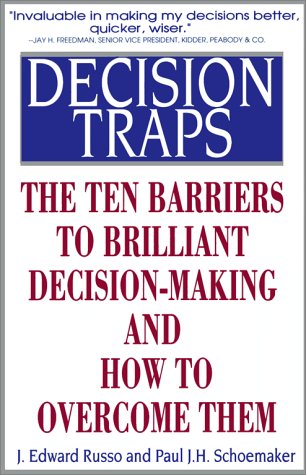
"Decision Traps: The Ten Barriers to Decision-Making and How to Overcome Them" by J. Edward Russo and Paul J.H. Schoemaker explains the common mistakes people and organizations make when making decisions. The authors discuss various thinking errors and biases that often lead to bad decisions. They stress the importance of being aware of these mistakes to make better choices. The book combines theory with practical examples to show how to avoid these errors. It recommends using structured methods, like properly framing decisions, considering different options, and using feedback. Russo and Schoemaker highlight the need to understand our own thinking limitations and biases. Overall, the book is a guide to improving decision-making skills and achieving better results in both personal and professional life.

"Gambler: Secrets from a Life at Risk" by Billy Walters is a memoir that chronicles Walters’ rise from a troubled childhood to becoming one of the most successful sports bettors in history. He reveals how disciplined risk-taking, data-driven analysis, and strict emotional control allowed him to consistently win in high-stakes gambling environments. His run ins with Las Vegas mobsters feel like you are re-watching the movie "Casino". The absolute treasure part of this book is that Billy Walters releases his entire predictive model for gambling on NFL games, which has made him hundreds of millions of dollars.
Note: This is a super rare book where the author (Billy Walters) gives away his secret sauce and shows you his exact gamlbing quantitative model that he used to make hundreds of millions of dollars! Most grift or try to sell you a system, Walters retired from professional gambling and showed how its done!
"How Big Things Get Done" by Bent Flyvbjerg and Dan Gardner explains why large projects often miss their budgets, schedules, and promised benefits. The book emphasizes reference-class forecasting, planning slowly before acting quickly, modular execution, and learning from comparable projects. It is a practical companion for premortems, what-if analysis, project decision execution, and planning under uncertainty.

"How to Measure Anything in Cybersecurity Risk" by Douglas W. Hubbard and Richard Seiersen applies Hubbard's measurement philosophy to cybersecurity risk, where teams often rely on vague labels like high, medium, and low instead of calibrated estimates. The book is a strong Decision Intelligence resource because it shows how to quantify uncertain security events, model loss exposure, use ranges and probability distributions, and improve risk decisions with better measurement rather than false precision.
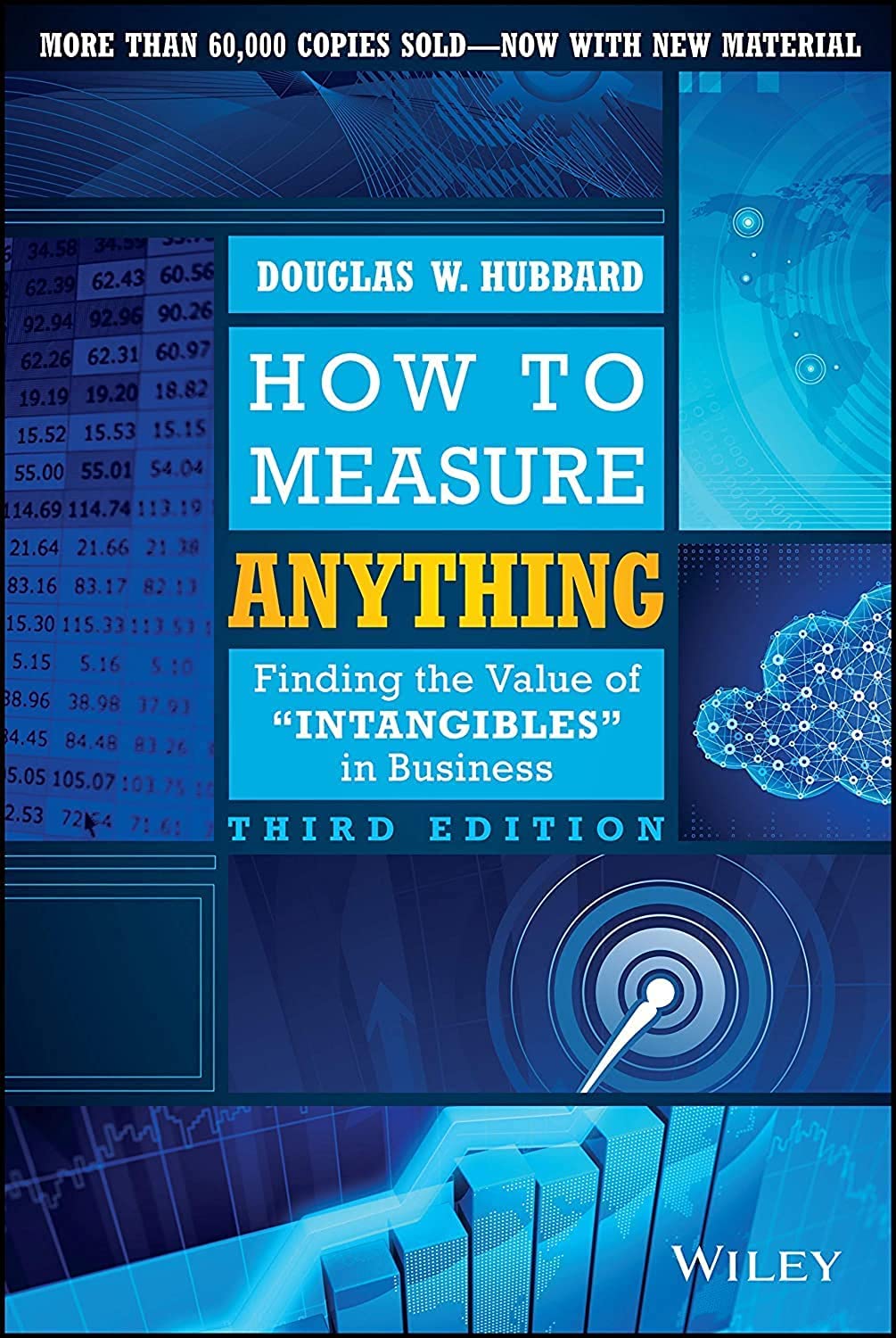
"How to Measure Anything: Finding the Value of Intangibles in Business" Douglas W. Hubbard provides a practical approach to quantifying seemingly immeasurable aspects of business. Hubbard challenges the notion that some things can't be measured and introduces methods to gauge intangibles like customer satisfaction, organizational flexibility, and innovation. The book explains various statistical techniques and tools to estimate and measure these factors effectively. It emphasizes the value of measurements in making informed business decisions and improving risk management. Overall, the book demonstrates that with the right techniques, anything can be measured and quantified.

"Hypothesis Testing: An Intuitive Guide for Making Data Driven Decisions" by Jim Frost explains how hypothesis tests work and how to interpret p-values, significance levels, confidence intervals, statistical power, and common test families. It is useful for Decision Intelligence because it helps decision-makers evaluate evidence, avoid overreacting to random variation, choose appropriate tests, and understand the tradeoffs between false positives and false negatives when using data to support a recommendation.

"Innumeracy: Mathematical Illiteracy and Its Consequences" by John Allen Paulos highlights the widespread lack of basic mathematical understanding in society and its negative impacts. Paulos illustrates how innumeracy affects decision-making, leading to misunderstandings in areas such as probability, statistics, and risk assessment. He uses real-life examples and funny anecdotes to show how mathematical illiteracy can result in poor judgments and susceptibility to pseudoscience. The book advocates for better math education and awareness to improve critical thinking and everyday decision-making. Overall, it emphasizes the importance of mathematical literacy in navigating the decision complexities of modern life.

"Noise" by Daniel Kahneman is about how random differences mess up our decisions. Noise is when people make different choices even when the situation is the same, like two doctors giving different diagnoses for the same problem or two judges giving different sentences for similar crimes. This random difference is not the same as bias, which is a consistent mistake. Noise is more like static on a radio, causing random errors. Kahneman explains that noise is everywhere, like in medicine, law, and business, and it makes outcomes unfair and inconsistent. The book suggests ways to cut down on noise, like using clear rules and computer programs to make decisions more consistent. Understanding and reducing noise can help make decisions fairer and more accurate.

"Outliers: The Story of Success" Malcolm Gladwell explores how success is shaped by a combination of effort, timing, and external factors. The 10,000-hour rule is a key heuristic, suggesting mastery requires around 10,000 hours of focused practice. Gladwell argues that success also depends on timing, cultural context, and opportunities, which play crucial roles in decision-making. Other decision heuristics include recognizing patterns of success influenced by environment and leveraging early advantages, illustrating that success is not solely based on individual effort but on how well one navigates opportunities.
Example decision frameworks introduced in this book:
- 10,000-Hour Rule: Mastery of any skill requires approximately 10,000 hours of dedicated practice. This heuristic highlights the importance of consistent effort over time.
- Timing and Opportunity: Success often hinges on being in the right place at the right time. Decisions can be guided by seizing opportunities that arise from specific historical or social contexts (e.g., Bill Gates and access to early computers).
- Cultural Legacy: The influence of cultural background on behavior and decision-making. People often inherit certain decision-making patterns or advantages based on cultural norms (e.g., rice farming cultures fostering hard work and precision.
- Accumulated Advantages (Matthew Effect): Small initial advantages can compound over time, leading to greater opportunities. Decisions early in life, like school placements or sports, can have long-term effects on success.
- Threshold Effect: After a certain point, additional talent or effort yields diminishing returns. This heuristic suggests that decisions should prioritize hitting essential thresholds rather than overemphasizing perfection.
- Practical Intelligence: This involves knowing how to navigate social situations and make smart, adaptive decisions based on context, which can be as important as raw intellect.

"Probability Theory: The Logic of Science" by E. T. Jaynes presents probability as a framework for reasoning logically when information is incomplete. Jaynes develops Bayesian inference from foundational principles and shows how prior knowledge, new evidence, and uncertainty can be combined to update beliefs consistently. The book is especially relevant to Decision Intelligence because it provides a rigorous foundation for probabilistic decision-making, evidence updating, forecasting, and distinguishing what is known from what remains uncertain.

"Quit: The Power of Knowing When to Walk Away" Annie Duke explains that quitting can be a smart and necessary part of making good decisions. She shows that people often keep pursuing goals even when it's not working, because they fear being labeled a quitter or don't want to waste what they've already invested. The book argues that knowing when to walk away is important and can lead to better outcomes. Annie Duke offers simple strategies to help people recognize the right time to quit and overcome the reluctance to do so.

"Resampling: The New Statistics" by Julian L. Simon and Peter Bruce introduces resampling, bootstrap methods, permutation tests, and simulation-based statistical reasoning. The book is especially relevant to Decision Intelligence because it makes uncertainty tangible: instead of relying only on formula-heavy statistics, decision-makers can repeatedly sample, simulate, and observe the distribution of possible outcomes. This reinforces the workshop themes of quantitative decision execution, probability calibration, and using simulation to reason about decisions when closed-form answers are difficult.

"Risk Savvy: How to Make Good Decisions" by Gerd Gigenrizer argues that most people misunderstand risk because information is often presented in confusing ways, leading to poor decisions in areas like health, finance, and everyday life. Gigerenzer shows that humans can make smart choices using simple heuristics (mental shortcuts) when information is framed clearly, especially through tools like natural frequencies instead of abstract probabilities. He critiques experts and institutions for promoting statistical illiteracy, particularly in medicine and media, where risks are exaggerated or miscommunicated. The book emphasizes that improving “risk literacy” empowers individuals to question data, avoid manipulation, and make more confident, informed decisions. Ultimately, it promotes clarity, transparency, and practical reasoning over complex but misleading statistical presentations.
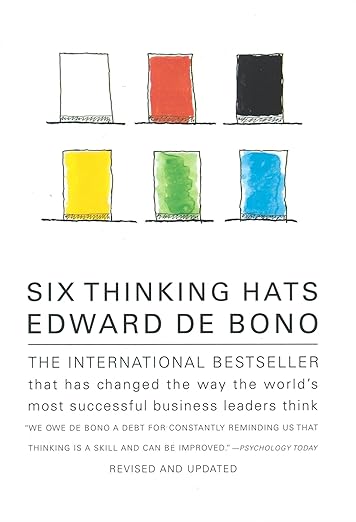
"Six Thinking Hats" by Edward de Bono introduces a method for group discussion and individual thinking involving six distinct perspectives, represented by different colored hats. Each hat symbolizes a different mode of thinking: white for facts and information, red for emotions, black for critical judgment, yellow for optimism, green for creativity, and blue for process control. By mentally wearing one hat at a time, individuals and groups can focus their thinking, leading to more thorough and effective decision-making. This structured approach helps separate emotions from facts, encourages diverse viewpoints, and fosters constructive collaboration.
"Smart Choices: A Practical Guide to Making Better Decisions" by John S. Hammond, Ralph L. Keeney, and Howard Raiffa provides a clear step-by-step approach for making better decisions. The book organizes decision quality around the PrOACT model: problems, objectives, alternatives, consequences, and tradeoffs, with additional attention to uncertainty, risk tolerance, and linked decisions. It is a valuable companion for the decision framing parts of this workshop because it shows how to turn a vague decision into a structured set of questions, criteria, and choices.
"Sources of Power: How People Make Decisions" by Gary Klein explores how experienced people make real decisions under time pressure, uncertainty, and high stakes. Klein's recognition-primed decision model explains how experts use pattern recognition, mental simulation, and prior experience to act quickly without comparing every possible option. This book deepens the intuition module by showing when intuitive execution can be powerful and why expertise, feedback, and context matter so much.
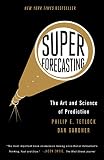
"Superforecasting: The Art and Science of Prediction" by Philip E. Tetlock and Dan Gardner shows that forecasting accuracy can be improved with practice, probabilistic thinking, open-minded updating, and good feedback loops. The book draws on forecasting tournaments and the habits of people who consistently make better predictions than typical experts. It is directly relevant to the workshop's forecasting, calibration, Brier score, and decision monitoring themes.

"The Black Swan: The Impact of the Highly Improbable" by Nassim Nicholas Taleb examines rare, high-impact events that are easy to explain afterward but hard to predict beforehand. For Decision Intelligence, the book is a reminder that forecasts, averages, and tidy models can miss tail risk, fragility, and structural surprise. It strengthens the workshop's uncertainty and risk themes by encouraging decision frames that consider extreme downside, robustness, humility about prediction, and the limits of historical evidence.

"The Flaw of Averages: Why We Underestimate Risk in the Face of Uncertainty" by Sam L. Savage explains why decisions based only on average assumptions are often wrong once uncertainty, distributions, and nonlinear outcomes are considered. The book is a strong resource for quantitative decision execution because it pushes decision-makers away from single-point estimates and toward ranges, scenarios, probability distributions, and simulation. It connects directly to the workshop's themes of uncertainty, risk, model assumptions, and using better representations of possible outcomes to improve decision quality.
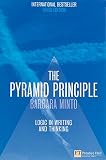
"The Pyramid Principle: Logic in Writing and Thinking" by Barbara Minto teaches a structured method for communicating complex ideas clearly. The core idea is to lead with the answer, group supporting points logically, and make the reasoning easy for an audience to follow. This is a valuable resource for the decision communication notebooks, especially when using the Minto Pyramid to explain recommendations, tradeoffs, risks, and supporting evidence.
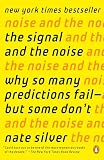
"The Signal and the Noise: Why So Many Predictions Fail--but Some Don't" by Nate Silver explains why prediction is hard and why confidence should not be confused with accuracy. Silver uses examples from sports, weather, politics, finance, and other domains to show how probability, uncertainty, Bayesian reasoning, and humility improve forecasts. This book pairs well with the quantitative decision modules because it teaches how to separate useful signal from noisy information.

"The Theory That Would Not Die: How Bayes' Rule Cracked the Enigma Code, Hunted Down Russian Submarines, and Emerged Triumphant from Two Centuries of Controversy" by Sharon Bertsch McGrayne tells the story of Bayes' rule and its long path from controversial theorem to practical tool for inference under uncertainty. For Decision Intelligence, it is a useful companion to forecasting, evidence updating, calibration, and probabilistic reasoning because it shows how beliefs should change when new information arrives. The book also gives historical context for why Bayesian thinking matters when decisions must be made with incomplete evidence.
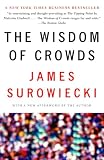
"The Wisdom of Crowds" by James Surowiecki explains how groups can outperform individuals when their judgments are diverse, independent, decentralized, and properly aggregated. The book is a strong resource for collective intelligence because it shows both the promise and the limits of pooled judgment. It also maps naturally to multi-person and multi-agent decision patterns where several perspectives need to be combined into a better final recommendation.

"Thinking in Bets: Making Smarter Decisions When You Don't Have All the Facts" by Annie Duke explores decision-making through the lens (decision frame) of a professional poker player. Duke argues that life is full of uncertainty and that we should think in terms of probabilities rather than absolutes. She emphasizes the importance of distinguishing between the quality of decisions and their outcomes, promoting a mindset where a decision process is valued more than the decision outcome. By using strategies from poker, Duke provides tools for better decision-making under uncertainty, such as embracing uncertainty, evaluating risks, and learning from past decisions. One key tool is to approach decisions as "financial bets", which is another decison framing technique that can calibrate a decision-maker's confidence. Overall, the book encourages a systematic approach to life and decision-making.

"Thinking, Fast and Slow" by Daniel Kahneman talks about how we think in two different ways. The first way, called System 1, is fast and automatic (using intuition and recognition). It makes quick decisions without us even thinking about it, but it can often make mistakes because it relies on gut feelings. The second way, called System 2, is slow and careful. It takes more effort and time because it involves thinking things through. Kahneman explains how these two systems work together and affect our decisions. He also discusses common thinking mistakes, like being too confident, sticking to first impressions, and fearing losses more than gains. The book shows that understanding these thinking patterns can help us make better choices and highlights that we aren't always as logical as we think. Through examples and research, Kahneman helps us see how our minds work in everyday situations.
If you do decide to read this book, some of the key chapters named "7 - A Machine For Jumping To Conclusions", "8 - Taming Intuitive Predictions" and "21 - Intuitions vs Formulas" are immediate must reads that apply to Generative AI application. Daniel Kahneman is a huge advovate of systematic training for decision making and using decision frameworks.
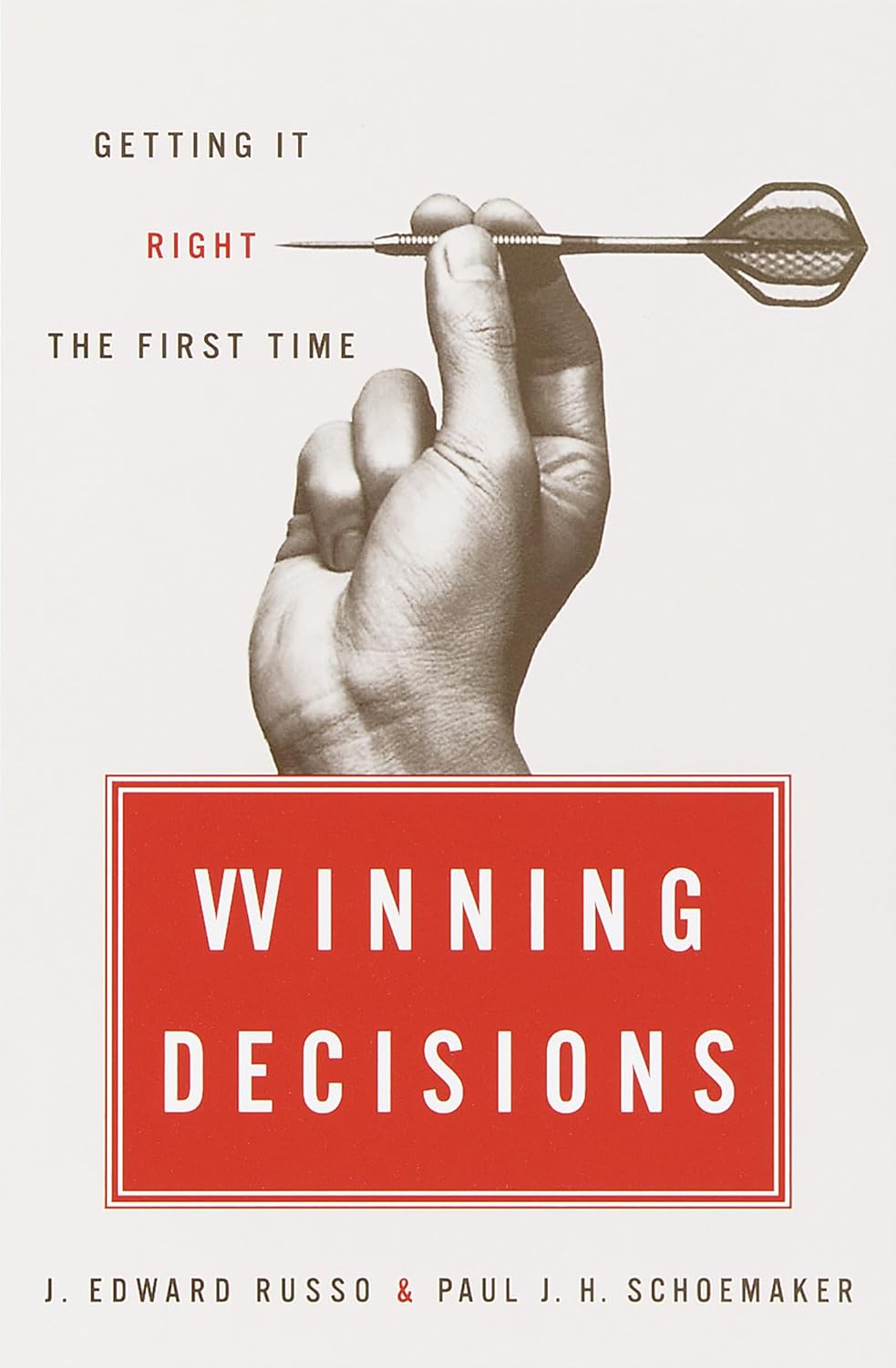
"Winning Decisions: Getting It Right the First Time" by J. Edward Russo and Paul J.H. Schoemaker explores how to make effective decisions from the outset. The authors emphasize the importance of decision framing, which involves defining the context and boundaries of a decision before making it. Proper framing ensures that the right problems are addressed and helps avoid common decision-making pitfalls. The book outlines techniques for gathering relevant information, considering various options, and using structured processes to arrive at sound conclusions. Russo and Schoemaker use real-world examples to illustrate how clear and precise framing can lead to better outcomes. They stress that good decision-making involves both rational analysis and intuitive judgment, and provide strategies to integrate these aspects effectively. Overall, the book aims to equip readers with the tools to make well-informed decisions that are correct the first time.
"Wiser: Getting Beyond Groupthink to Make Groups Smarter" by Cass R. Sunstein and Reid Hastie explains why group decisions often fail and how to design better group decision processes. The book covers problems such as groupthink, cascades, polarization, and overemphasis on shared information, then offers practical ways to surface independent knowledge and dissent. It is useful for improving collective intelligence workflows, expert panels, and AI-assisted decision review.